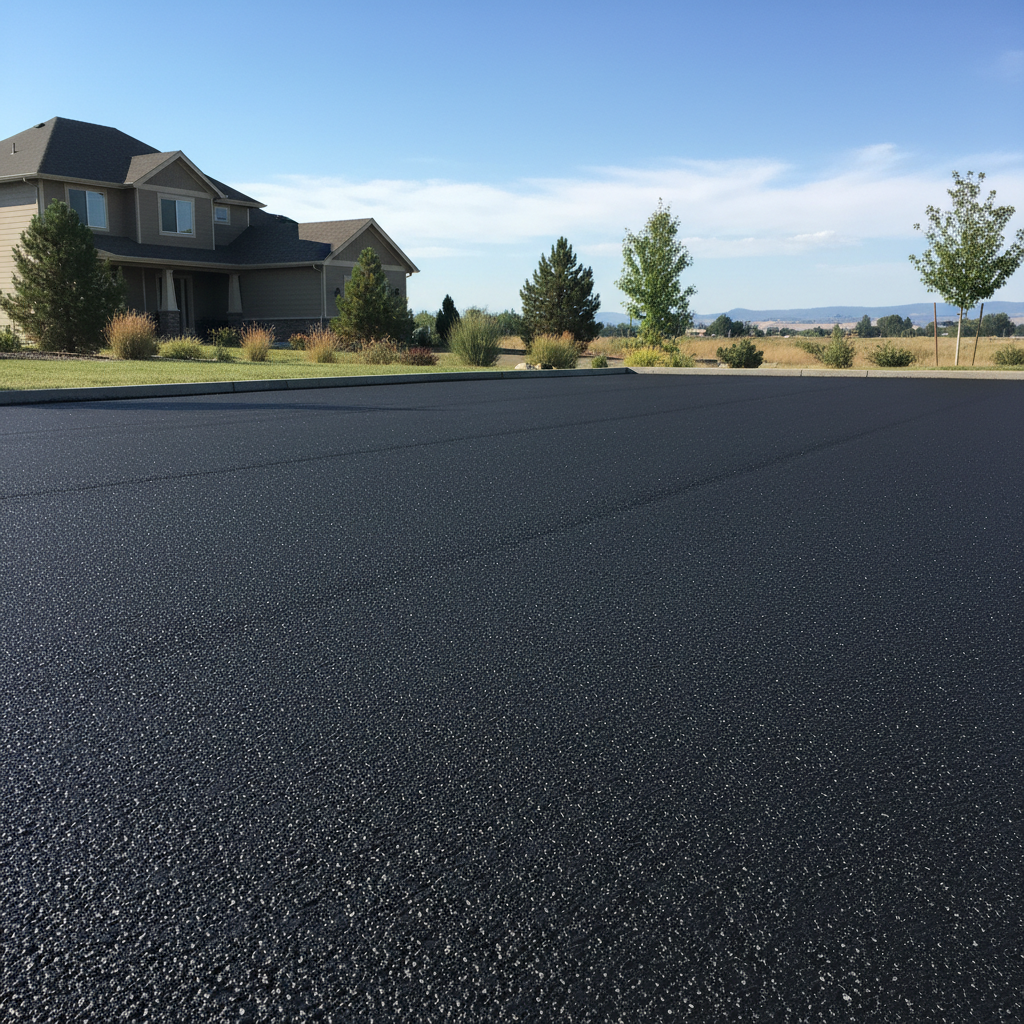
Alright, let's talk commercial asphalt for your home. I know, the word 'commercial' usually makes folks think of big parking lots or industrial zones. But here in Kennewick, I get a lot of homeowners asking about it for their driveways, private roads, or even basketball courts. And for good reason. It's tough stuff. So, I figured I'd answer some of the most common questions I hear. No fluff, just what I've learned working with this material for years.
What's the real difference between 'commercial' and 'residential' asphalt?
Honestly, it's not some secret formula. When we talk about 'commercial' asphalt for a home project, what we usually mean is a thicker, more robust application of the same asphalt mix you'd use for a residential driveway. It's about the depth of the asphalt layers and often, the quality and compaction of the base material underneath. For a typical residential driveway, you might see 2-3 inches of asphalt on a compacted aggregate base. For a 'commercial' application on a home property, we're often talking 3-5 inches of asphalt, sometimes even in two layers (a binder course and a surface course), laid over a much more substantial and meticulously prepared base. It's built to handle heavier loads, more frequent traffic, and just generally last longer under tougher conditions. Think about the difference between a sidewalk and a highway – same basic material, very different construction.
Why would I even consider commercial asphalt for my home? Isn't it overkill?
It might sound like overkill, but it's not always. Here's when it makes a lot of sense: if you've got a long driveway, especially one that sees heavy vehicles like RVs, delivery trucks, or even just multiple family cars daily. If you're building a private road to your property, or if you're in an area with really poor soil conditions that need extra stability. I've worked on properties out towards Badger Mountain where the expansive clay soils can be a real headache. A thicker, more robust asphalt system with a well-engineered base can help mitigate issues like cracking and heaving that you'd see with a thinner, less durable residential application. It's an investment in longevity and fewer headaches down the road. You pay more upfront, but you often save on repairs and replacement in the long run.
Will commercial asphalt look different than regular driveway asphalt?
Visually, not really. The asphalt mix itself, the top layer, is generally the same type of surface mix you'd use for any driveway – a smooth, dense, black finish. The difference is under the surface. You won't see the extra thickness or the beefier base once it's all laid down. What you will notice over time is how it holds up. A commercial-grade application is less prone to rutting, cracking, and potholes, especially in high-traffic areas or spots where heavy vehicles often park. It maintains that fresh, smooth look for much longer because it's built to withstand more stress.
What about drainage? Does a thicker asphalt surface affect how water drains?
Drainage is critical, no matter the thickness of your asphalt. And no, a thicker asphalt layer doesn't inherently change how water drains. What matters is the slope and the sub-base preparation. We always design the paving with proper grading to ensure water flows away from your home and doesn't pool on the surface. Whether it's a thin residential driveway or a thick commercial-grade one, the goal is always to get that water off the surface quickly and efficiently. If anything, a more robust base under a commercial application can sometimes offer better stability against erosion caused by water, but the surface drainage itself is all about the pitch we build into it. Here in Kennewick, especially with our occasional heavy downpours, getting the grade right is non-negotiable.
How long can I expect a commercial-grade asphalt driveway to last compared to a standard one?
This is where the investment really pays off. A standard residential asphalt driveway, properly installed and maintained, might give you 15-20 years. A commercial-grade application, with its thicker layers and superior base, can easily push that to 25-30 years, sometimes even more, before needing a major overhaul. Of course, that's assuming you're doing your part with regular maintenance like crack sealing and sealcoating. But the inherent strength and durability mean it's less susceptible to the everyday wear and tear that can shorten the life of a thinner pavement. It's built to take a beating and keep on performing.
Is the installation process for commercial asphalt much more disruptive or longer?
It can be a bit more involved, yes, but not necessarily 'disruptive' in a bad way. The main difference is usually in the excavation and base preparation. We might need to dig a little deeper to lay down a more substantial aggregate base, and that base will require more material and more compaction passes. If we're doing multiple asphalt layers, that also adds a bit of time. So, the project might take a few extra days compared to a basic residential driveway. But the actual paving part, once the base is ready, is pretty similar. We're still bringing in the hot asphalt and laying it down efficiently. Alpha Paving Solutions always aims to keep things moving smoothly and communicate the timeline clearly so you know exactly what to expect.
Will commercial asphalt require different maintenance than a regular driveway?
The good news is, the maintenance routine is pretty much the same. You'll still want to keep it clean, address any cracks as they appear, and plan for sealcoating every few years (typically 2-4 years, depending on traffic and sun exposure). The difference is, with a commercial-grade installation, you might find yourself doing less maintenance over its lifespan because it's simply more resilient. It's less likely to develop significant cracks or potholes as quickly as a thinner pavement. So, while the tasks are the same, the frequency or severity of issues you're addressing might be reduced, saving you time and money in the long run.